DISC style · measured pace · task focus
The Careful style
Careful, precise and committed to getting it right
Overview
If Careful is your leading style, you are measured in pace and focused on the task. You want to understand how things work, get the details right and follow sound logic. You prefer well-organised plans, clear standards and time to think before you commit.
You hold yourself to a higher standard than anyone sets for you: you would rather be right than fast, and accurate than popular. You ask the questions that expose weak plans while they are still cheap to fix. You do your best work when you know the standard, understand the reasoning behind it and have time to prepare.
Every strength has a shadow. The thoroughness that catches the error nobody else saw is the same thoroughness that can keep you researching a decision long after it needed to be made. Thorough, turned up too far, becomes paralysed.
What drives them: Getting it right: understanding how something works and producing work that stands up to scrutiny.
How you recognise one
- They ask the clarifying question everyone else was too polite to ask.
- They have read the document before the meeting, and they have notes.
- They say “let me come back to you” rather than give an answer they have not checked.
- They notice the wrong date on slide fourteen.
Under pressure
Under pressure you withdraw to think, ask for more information and hold more tightly to the rules. You may become critical of other people's work, or keep checking your own long after it is good enough. What helps is a clear standard, the reasoning behind the deadline, and permission to say what you will deliver and what you will not.
Strengths
- High standards and attention to detail: errors that slip past everyone else stop at your desk.
- Evidence-based thinking: you separate the argument from the person making it, which keeps decisions honest.
- Planning and risk awareness: you see the failure points in a plan while they are still cheap to fix.
- Reliably accurate work: people learn they do not need to check what you deliver.
- Independent and self-managing: you look after your own quality without needing supervision.
- Considered precision: when you do speak, your words are specific and worth hearing.
Thorough can become paralysed
- Thorough turned up too far becomes paralysed: past a certain point, more analysis becomes a form of delay rather than care.
- Precise turned up too far becomes critical: your accuracy can land as an attack, and your silence can read as disapproval.
- Careful turned up too far becomes over-careful: not every low-stakes choice deserves a spreadsheet.
- Principled turned up too far becomes rigid: being right about the detail can cost you both the relationship and the outcome.
- Reserved turned up too far becomes withdrawn: going quiet to think is fine, but if nobody knows that is what you are doing, they fill the silence with worse explanations.
What brings out their best
- Tell them the standard: what good looks like, in concrete terms.
- Share the reasoning, not just the instruction.
- Give them time to prepare, starting with the agenda before the meeting.
- Point them to where the detail is, so they can check it for themselves.
- Keep feedback specific and about the work, not general and about them.
What kills it: Being told to “just wing it”.
Writing to them: Give the rationale, spell out exactly what is expected and tell them where to find the detail.
The Careful profiles

C
The Navigator
Thoughtful, precise and committed to getting it right. You check the map, spot the rocks ahead and help everyone arrive safely.

C / D
The Rigorous Driver
Analytical, exacting and determined. You find the flaw in the plan and make sure it actually gets fixed.

C / I
The Engaging Analyst
Thoughtful, precise and personable. You research deeply, then explain it in a way people actually enjoy.
C / S
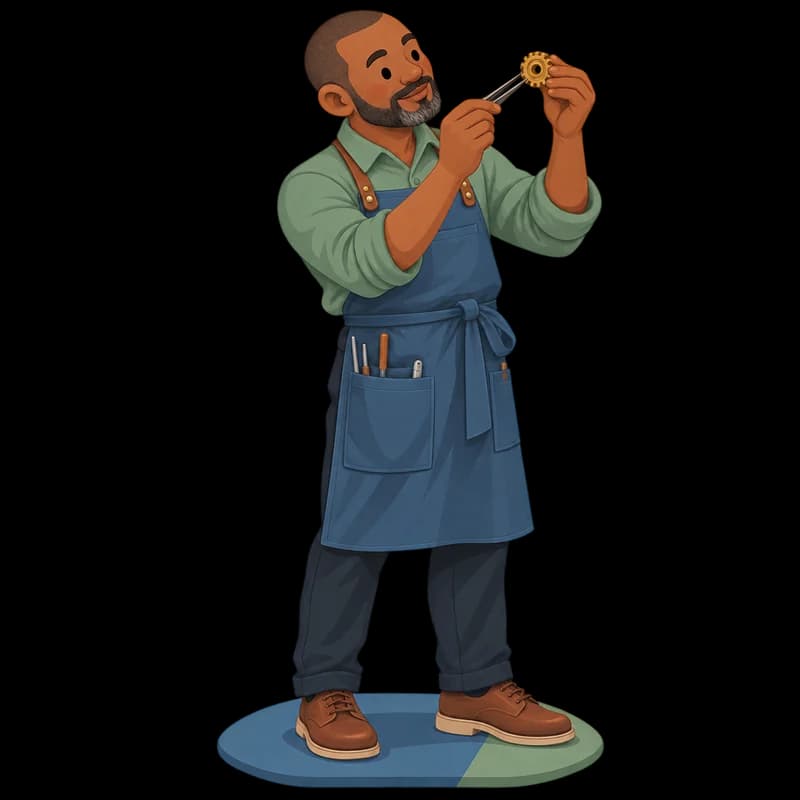
The Meticulous Steadfast
Calm, careful and exact. You work patiently, follow through completely and produce work that rarely comes back with corrections.