Team building activities for work that change how people work together
By Dennis Kriel ·
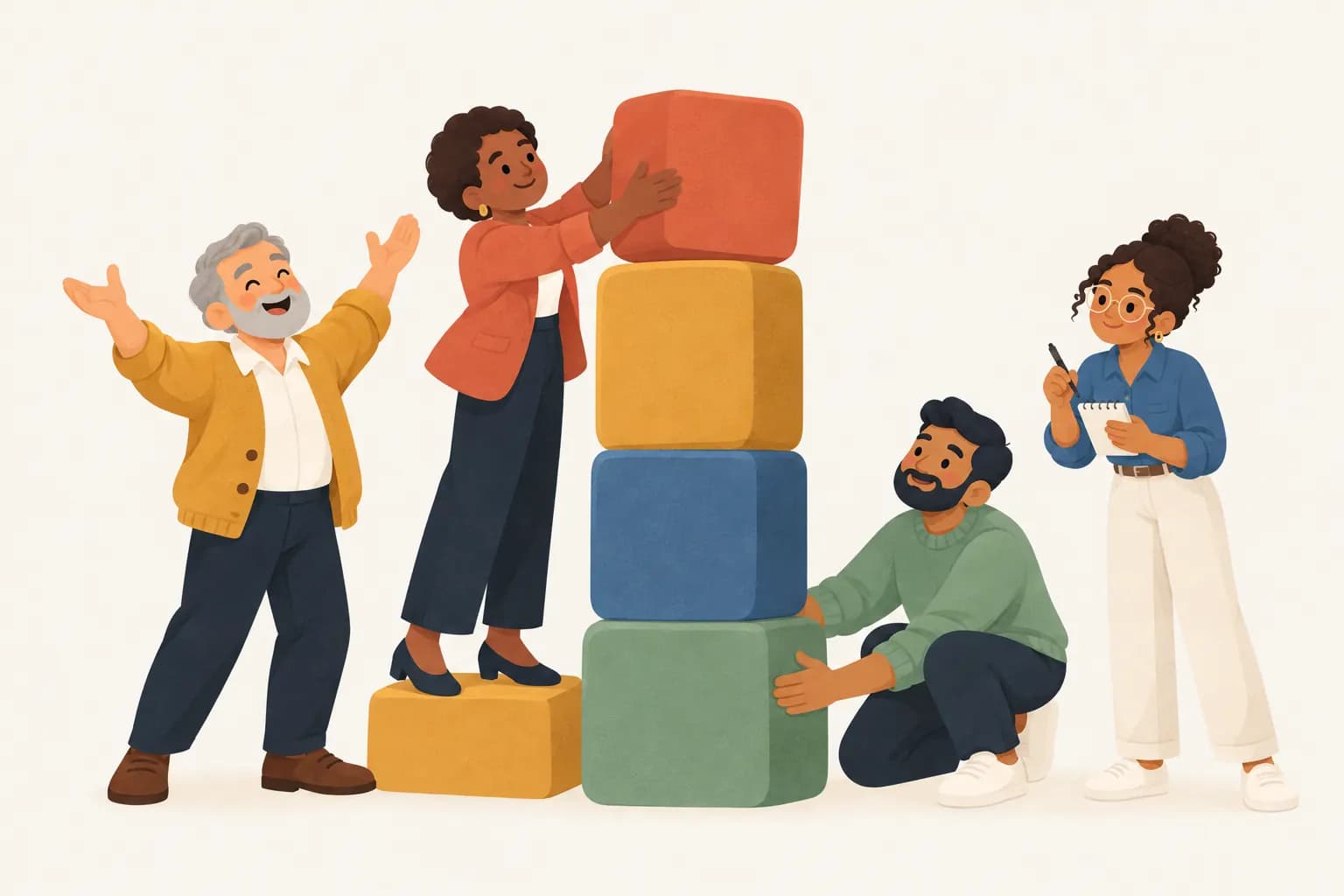
The best team building activities for work are short, optional to go deep on, and followed by a proper conversation about how the team actually worked together. The activity is only the excuse; the debrief is where things change. Below are activities grouped by the time you have, from a 15-minute warm-up to a full away day, with what each one tends to show about the four DISC styles and the questions to ask afterwards.
What makes team building activities work
Most team building games fail because they are compulsory, reward the loudest people, and nobody talks about what happened. A good session has a clear purpose, a mix of activities that suit different people, and ten minutes at the end to make sense of it.
Every team has a mix of styles, and each style experiences the same activity differently. Direct people want a challenge and a clear win. Inspiring people want energy and interaction. Steady people want to feel safe and included. Careful people want to understand the rules and do it properly. Plan for all four and you will lose fewer people at the first exercise.
Keep DISC in its place, too. It describes how people like to work, never how good they are, so use it to understand each other, not to judge who should lead or who belongs.
- Say why you are doing it: "We want to get better at making decisions under pressure."
- Make the stretchy parts optional, and offer a role for people who would rather observe.
- Mix the groups, so the same four friends don't always work together.
- Debrief every activity with three questions: what happened, what did you notice about how we worked, and what will we do differently on Monday?
Quick activities (15 to 30 minutes)
These fit at the start of a team meeting or after lunch on a planning day. For something even lighter, start with a few icebreaker questions for work.
- Marshmallow tower (18 minutes): teams build the tallest free-standing tower from 20 sticks of spaghetti, a metre of tape, string and a marshmallow on top. Shows: Direct people start building at once, Careful people want to test first, Steady people hold it together, Inspiring people keep the energy up. Debrief: "When did we plan and when did we just try things? Which worked better?"
- Survival ranking (25 minutes): each person ranks 12 items to survive a breakdown in the Karoo, then the group agrees one list. Shows: who pushes for a quick decision, who wants to reason it through, and who goes along to keep the peace. Debrief: "Did anyone change their mind? Was a good idea lost because it was said quietly?"
- Same message, four ways (20 minutes): pairs rewrite a real team announcement for a Direct, Inspiring, Steady and Careful reader. Shows: how differently each style hears the same news. Debrief: "Which version would you want to receive, and why?"
Half-day team building activities
A half-day lets you get out of the office and do something together without the cost of a full day. Joburg and Cape Town both have plenty of venues, and many will host the activity and lunch.
- Escape room (one hour plus lunch): small teams solve puzzles against the clock. Shows: Careful people spot the clues others miss, Direct people take charge of time, Inspiring people share ideas out loud, Steady people make sure nobody is left out. Debrief: "Who held which role without being asked? Is that the same at work?"
- Potjie cook-off (three to four hours): teams each make a potjie with a budget and a secret ingredient, then judge each other's. Shows: planning, sharing tasks and who gets the fire going. Debrief: "How did we split the work, and who ended up doing more than their share?"
- Volunteering morning: a community garden, a school library or a painting day at a children's home. Shows: the quiet organisers, often Steady and Careful people, who get things done without fuss. Debrief: "What did you see a colleague do well that you hadn't noticed before?"
Away day ideas
An away day works best with one real piece of work and one piece of fun, and ideally a braai at the end. In the year-end season book early, as venues fill up from late October.
- City race (half the day): mixed teams follow clues around Maboneng, Braamfontein or the Cape Town city centre, taking photos at each stop. Shows: route planners versus explorers, and how teams decide when they disagree. Debrief: "When did our different approaches help us, and when did they slow us down?"
- Team style map (90 minutes): everyone takes the free DISC Test beforehand, then stands on a large floor map of the four styles and talks about what they need from others. Shows: the team's mix, and where it is crowded or thin. Debrief: "What does our mix mean for how we run meetings and make decisions?"
- Look back, look ahead (90 minutes): a structured review of the year, using our year-end team review questions. Shows: what people really think, if the session feels safe. Debrief: agree three changes for next year and who owns each.
Remote team building activities
Remote teams need shorter sessions, cameras optional, and activities that work for people who don't love the spotlight.
- Rotating quiz (30 minutes): each week a different person writes five questions about their own interests. Shows: Inspiring people shine as hosts, while Careful people write the best questions. Debrief: none needed; it builds familiarity over time.
- Show one thing (15 minutes): everyone shows one object from their desk and says why it is there. Shows: a gentle way for Steady and Careful people to share without being put on the spot. Debrief: "What surprised you about someone?"
- Shared puzzle (40 minutes): breakout groups solve a logic puzzle in a shared document. Shows: who organises the page, who checks the answer and who keeps everyone talking. Debrief: "How did we work without seeing each other's faces? What would help in our real projects?"
Turn one good day into a better year
A good activity gives you a moment of insight; a shared language keeps it going. The DISC Test team pack gives up to 15 people a Full Playbook each, a live team map and pair reports between members, for US$249 a year. Members choose what they share, and leaders can use our guide to leadership styles alongside it. Running a big session on the day? The Icebreaker pack runs a live style check for up to 30 people on their phones. You will find more ideas in our teams topic.
Map your team
See where your team leans, what it might be missing, and compare any two colleagues.
DISC for teamsQuestions people ask
What are good team building activities for work?
Good activities are short, inclusive and followed by a debrief. Problem-solving tasks like the marshmallow tower, an escape room or a potjie cook-off work well, because they show how people actually work together.
How do you make team building fun for introverts?
Offer roles that don't need the spotlight, such as timekeeper or observer, use small groups rather than performing in front of everyone, and give people a heads-up about what will happen.
How long should a team building session be?
A quick activity takes 15 to 30 minutes, a half-day suits most teams, and a full away day works best once or twice a year. Always leave time to debrief.
What are some team building games for remote teams?
A rotating quiz, a "show one thing" round and a shared online puzzle all work well. Keep sessions short, make cameras optional and rotate who hosts.
Read more about the Direct, Inspiring, Steady and Careful styles.
Related profiles




More guides

Year-end team review: questions that get honest answers
Team building questions for a year-end review that get honest answers: what went well, what was hard, how you work together and what to change next year.

Icebreaker questions for work: 44 team building questions that get people talking
44 icebreaker questions for work and team building, grouped by purpose: quick warm-ups, working styles, deeper team questions and remote meetings.

Assertive communication: passive, aggressive and assertive, by style
Assertive communication explained: passive, aggressive and passive-aggressive examples, how each DISC style slips under pressure, and phrases to use.